Mathias de Lattre’s Zoorama is an album of images taken by the artist as a child in the year 2000. As an album, it is closer to an LP than the digital folder. The pictures were taken on a disposable camera and so they are a limited, connected series: distinct from the endless scrolling images that human beings have become habituated to since then.
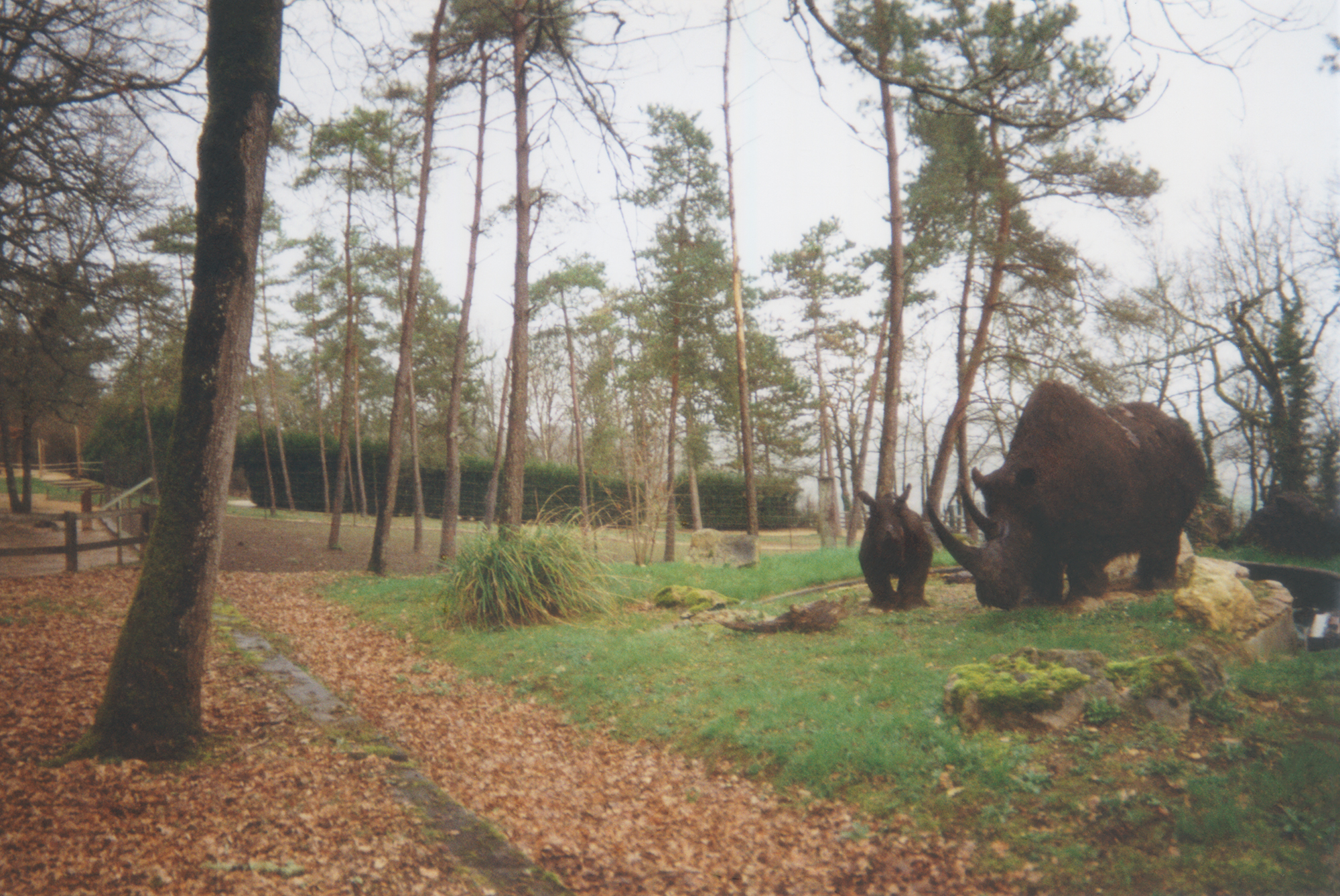
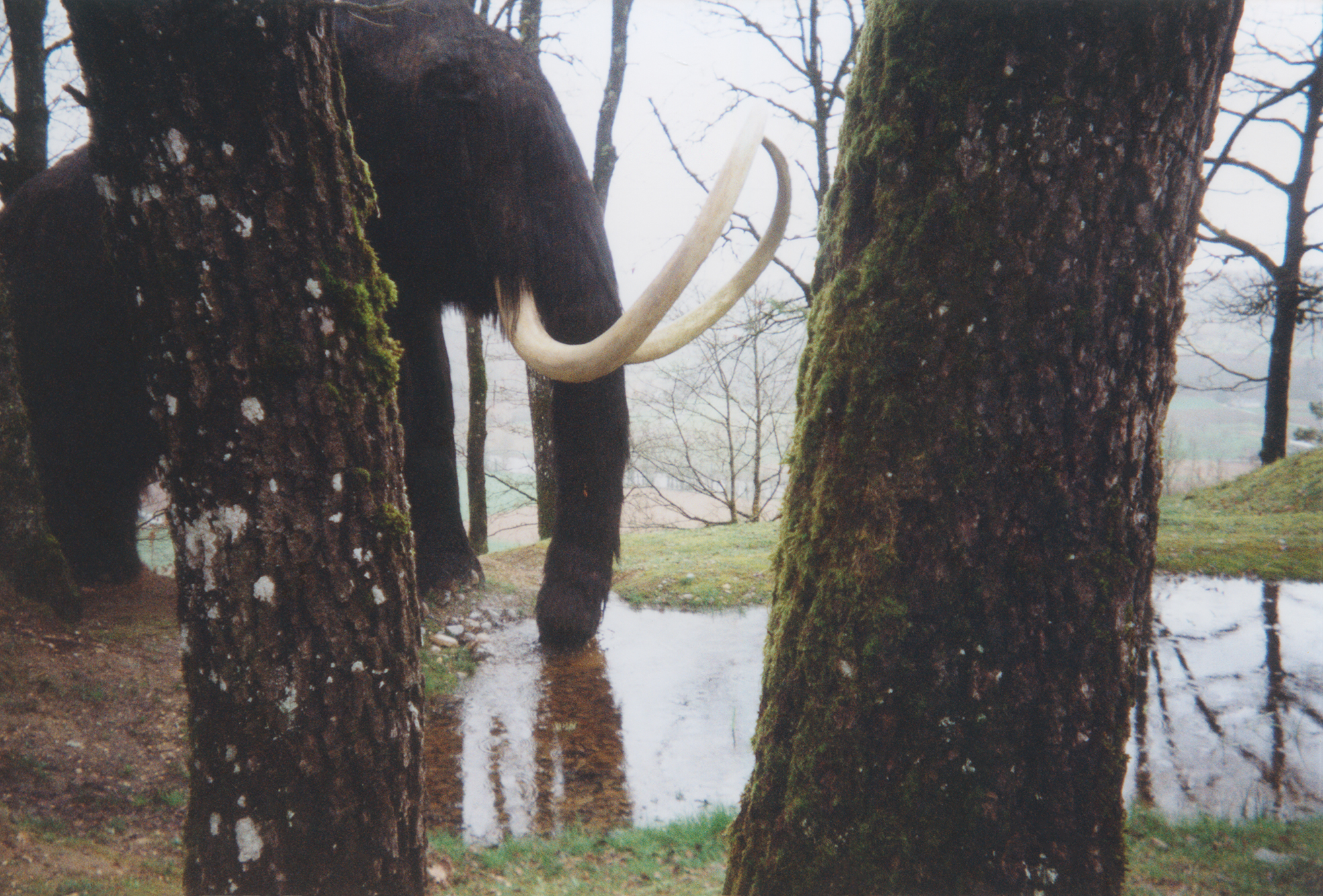
Zoorama looks at live animals and life-sized models of ancient animals in Parc du Thonac in the Dordogne, not far from the famous prehistoric caves at Lascaux. de Lattre was there for a week on an elementary school trip. Before he left, for the first time, his mother gave him a disposable camera.
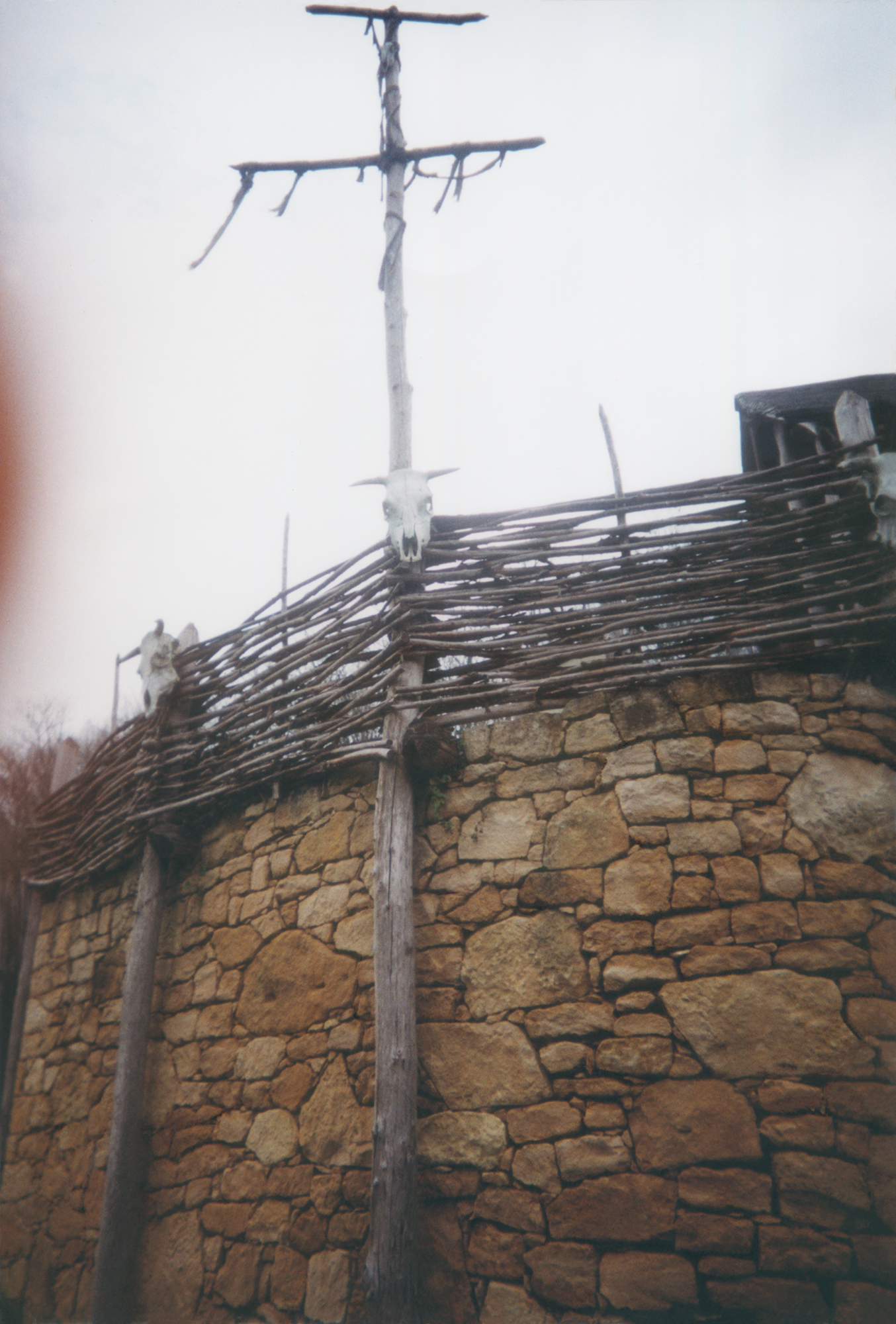
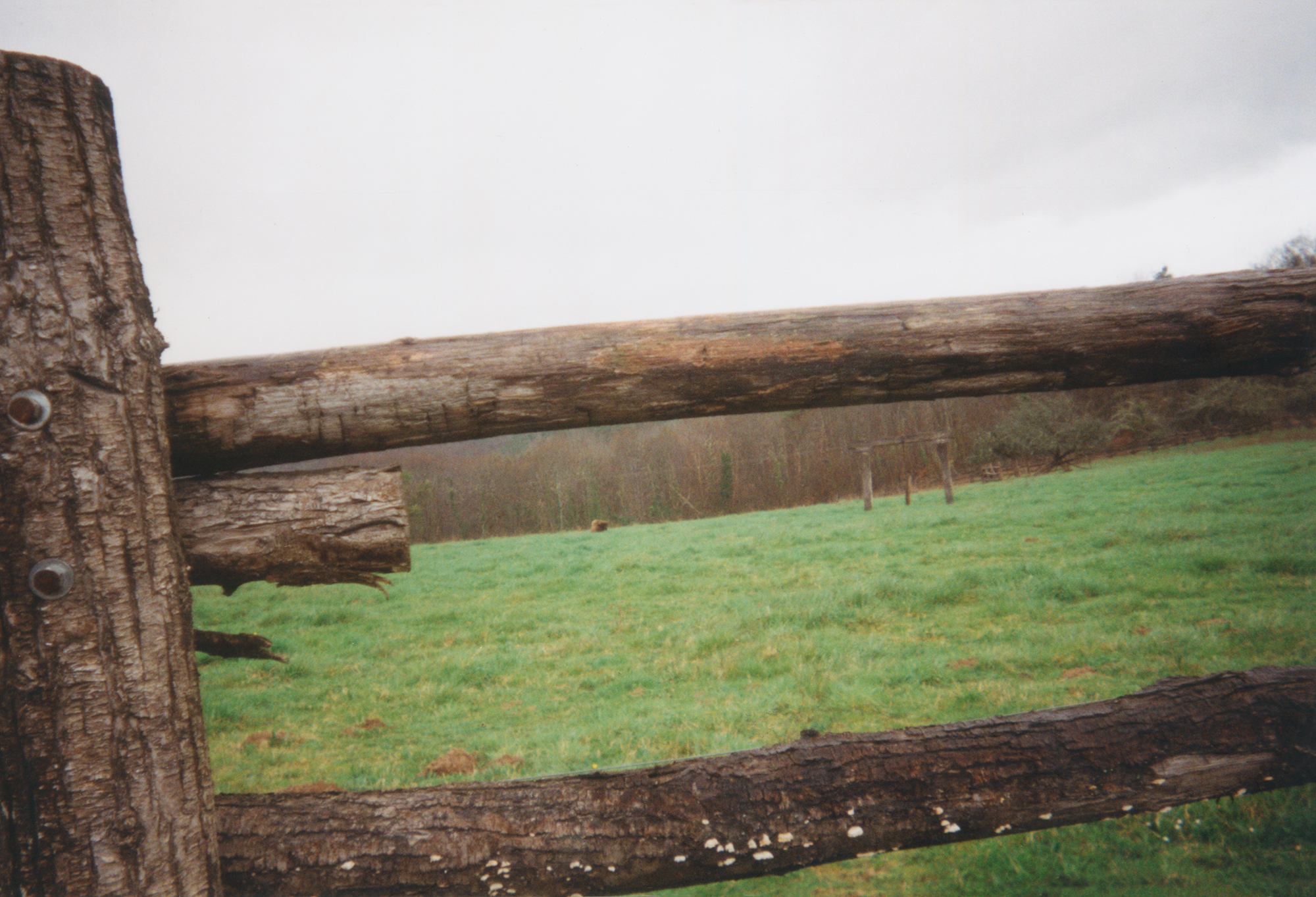
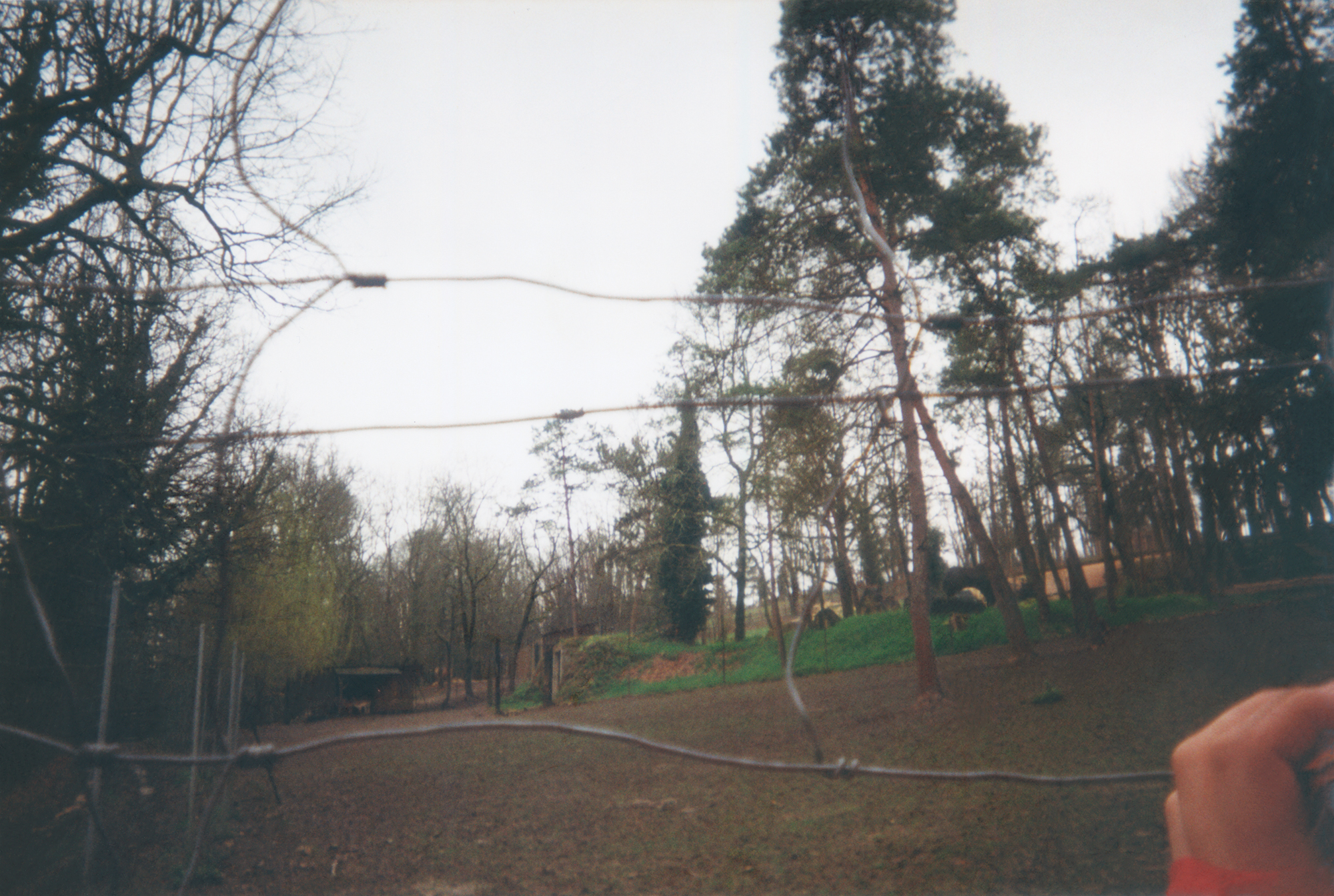
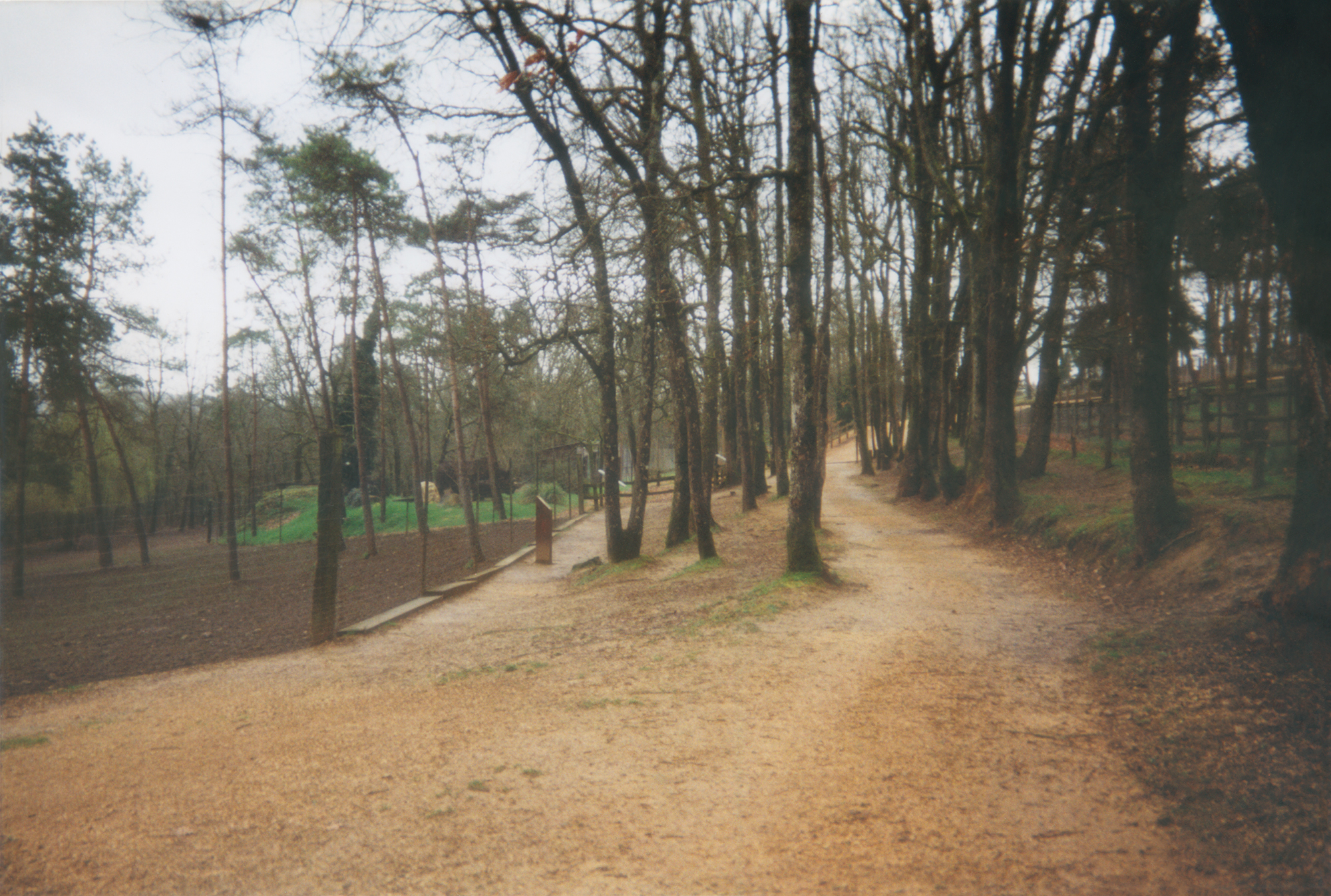
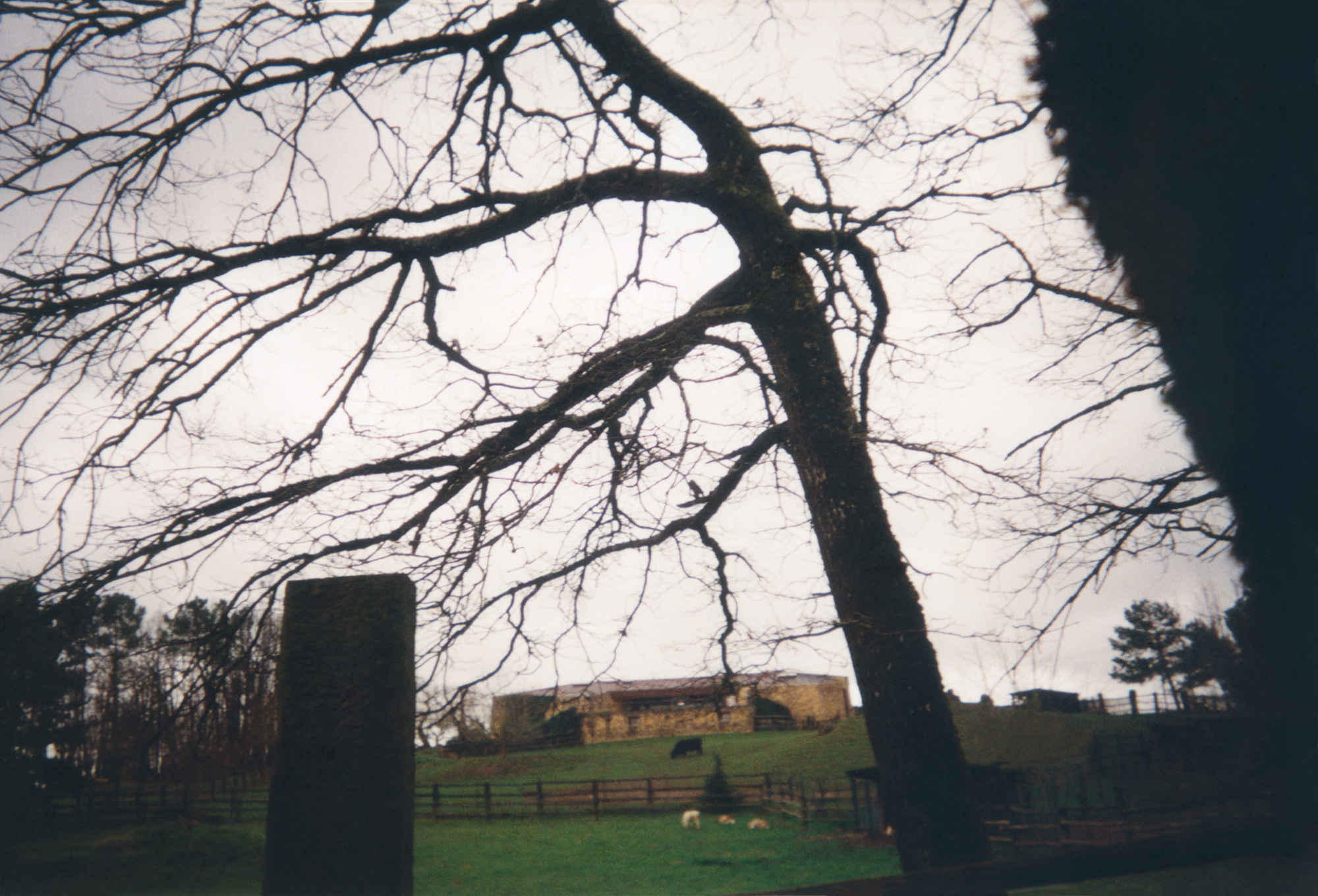
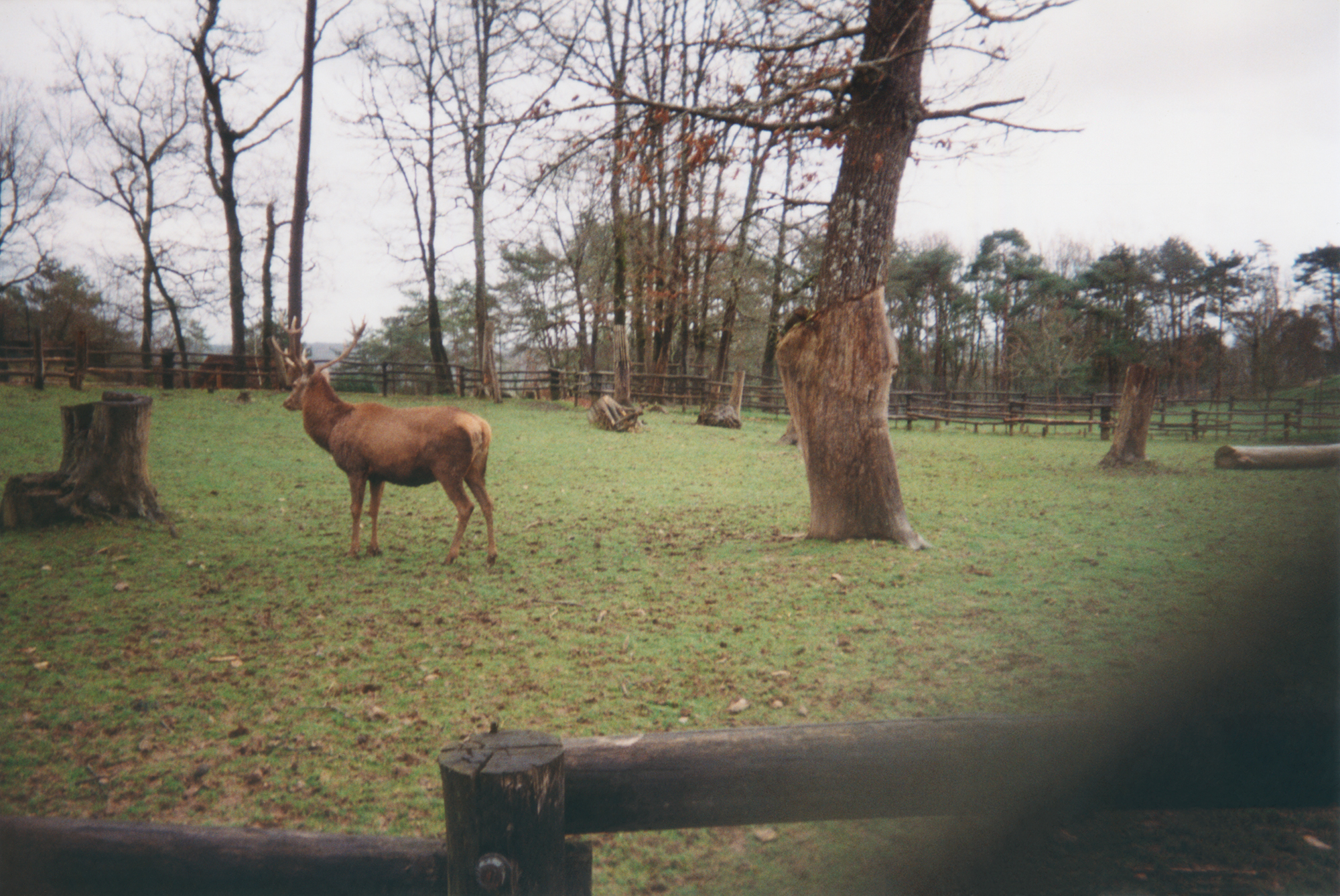
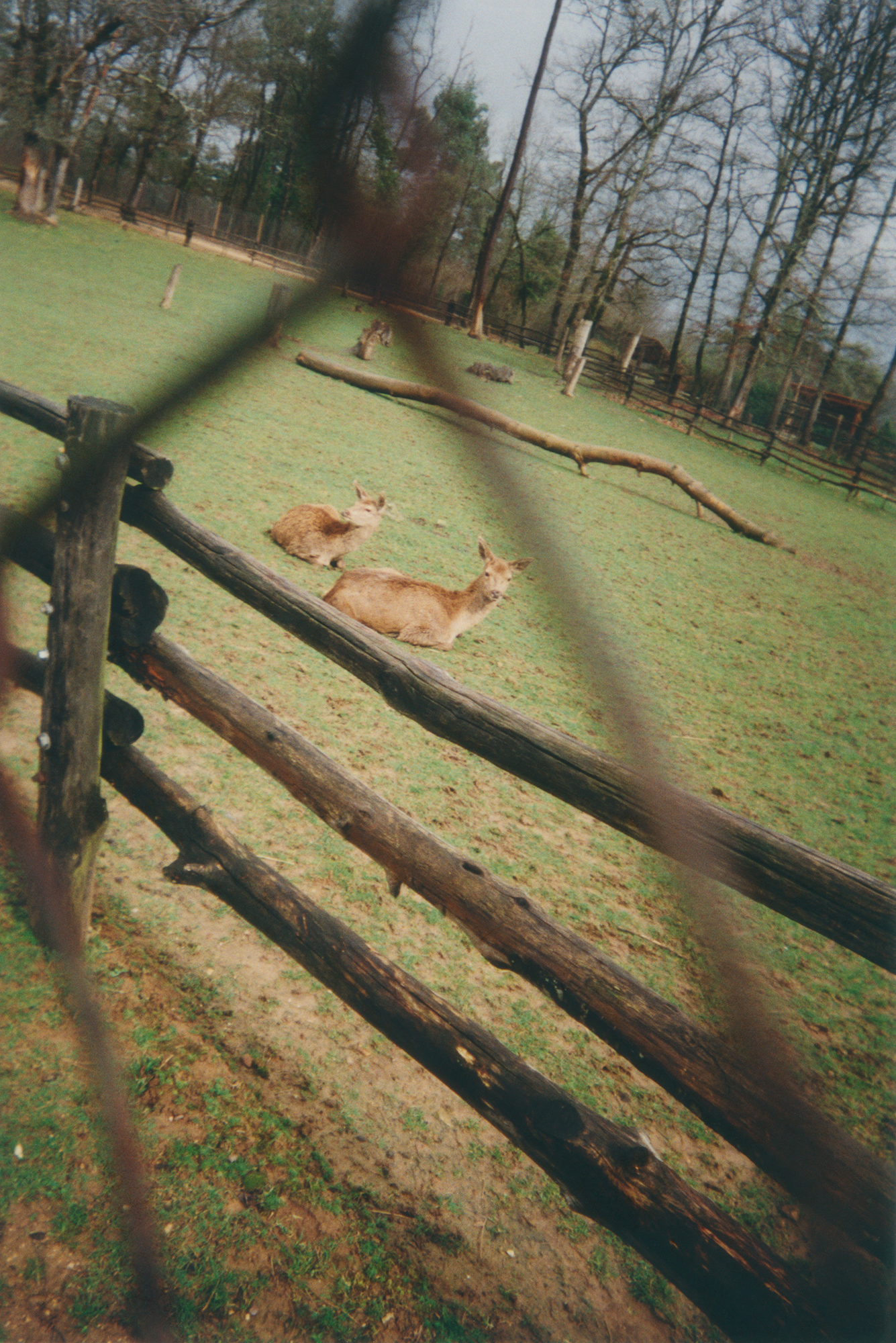
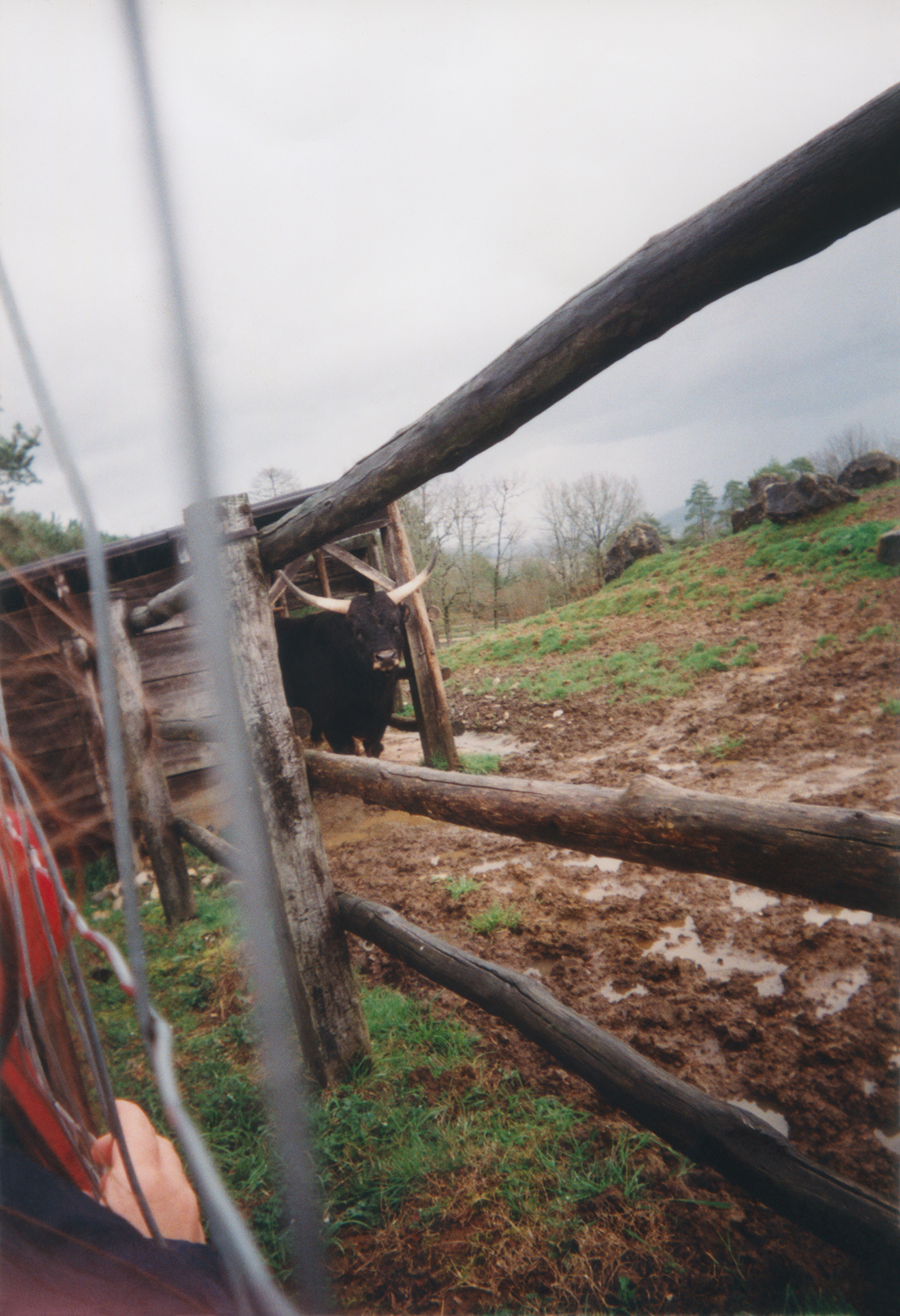
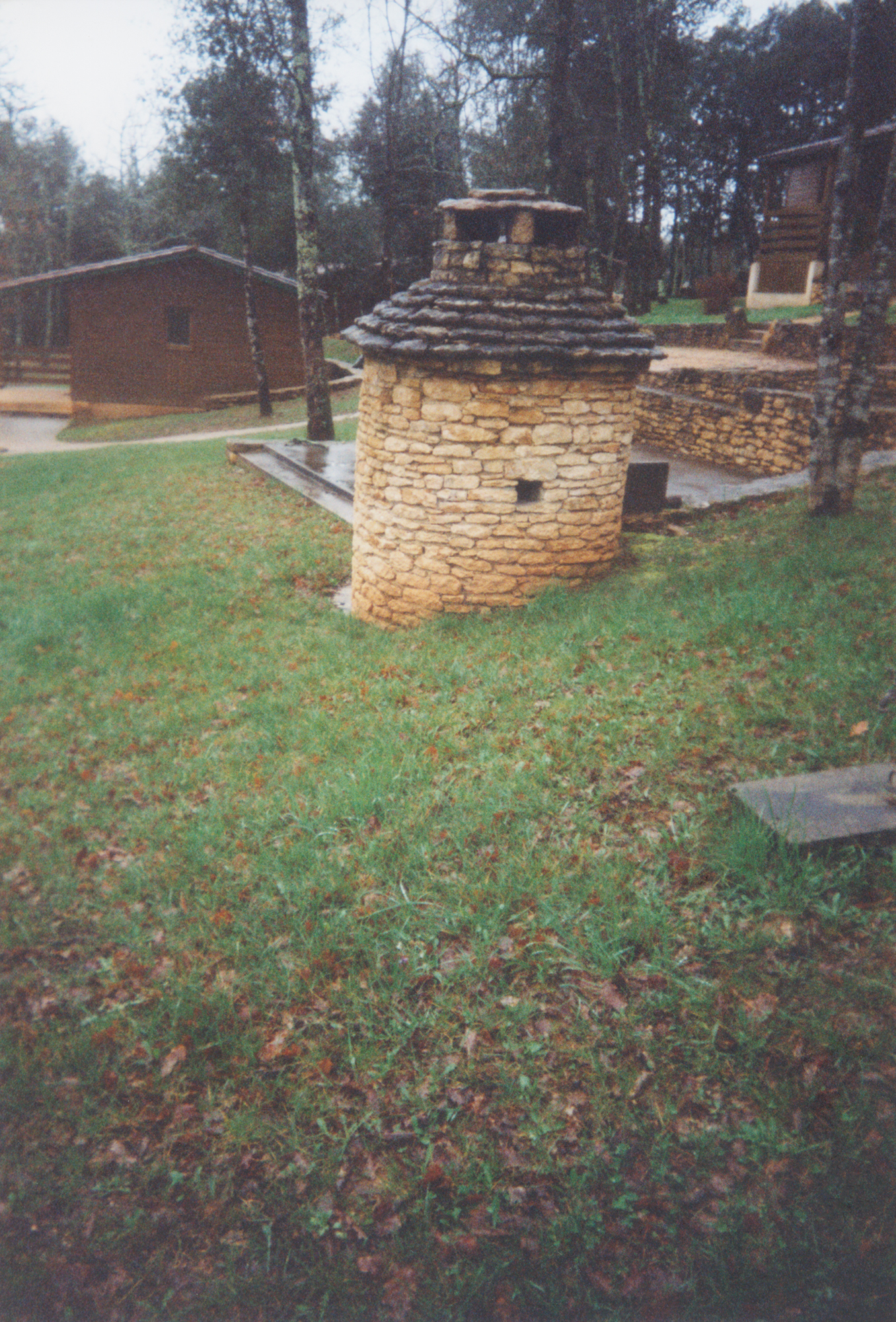
The first thing that surprised me, when I looked at these images, was the way that they sustained an atmosphere across a wide range of forms. It’s winter, and there is a raw feeling to the muddy landscape, dark tarmac and bare trees. Many images foreground the animals’ enclosures: wire fences or wood hammered together, bark still on the trunk, raw.
Within these wintry pictures, place, perspective, and subject keep shifting.
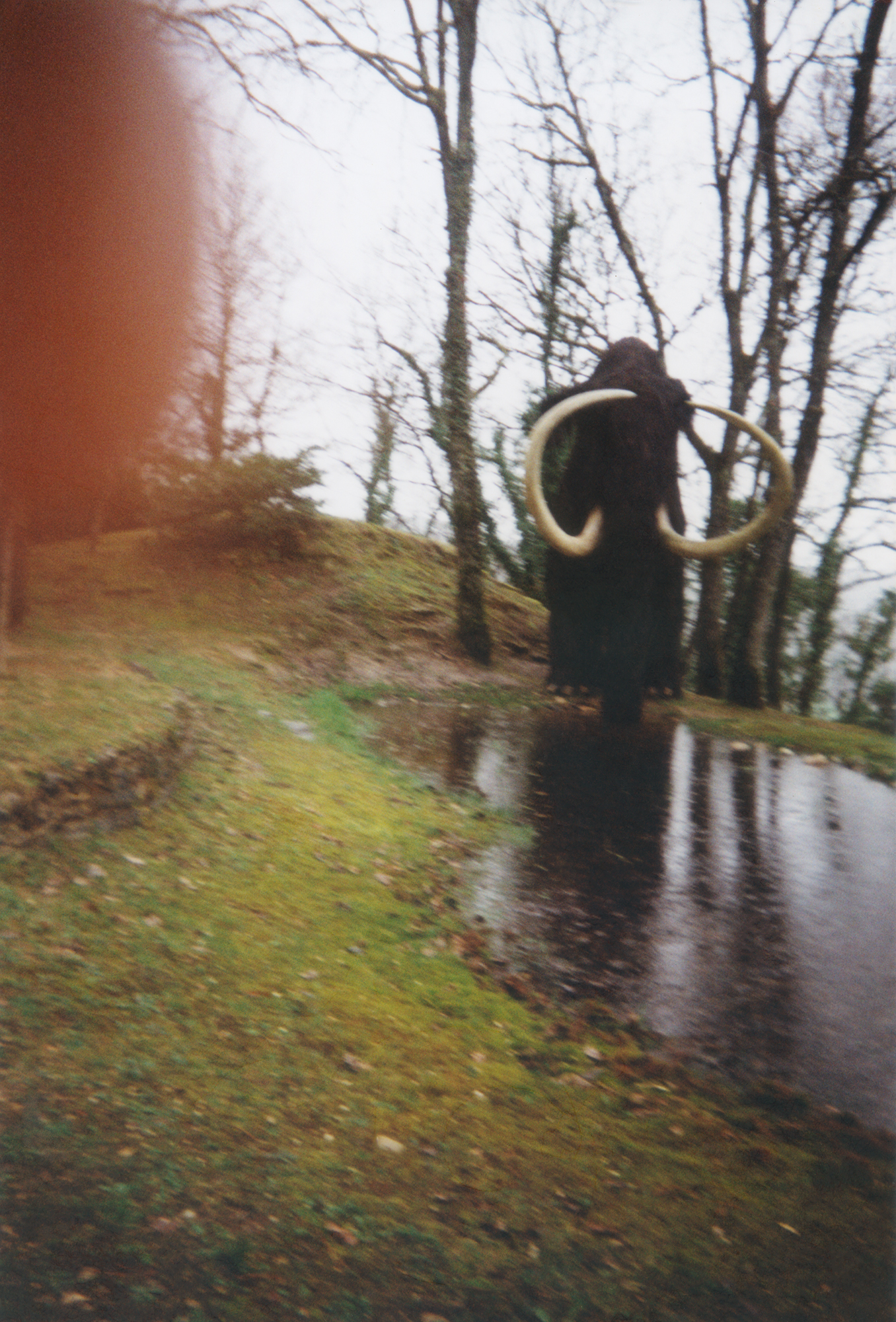
There is a live stag and a fake mammoth, separately, under the same white sky.
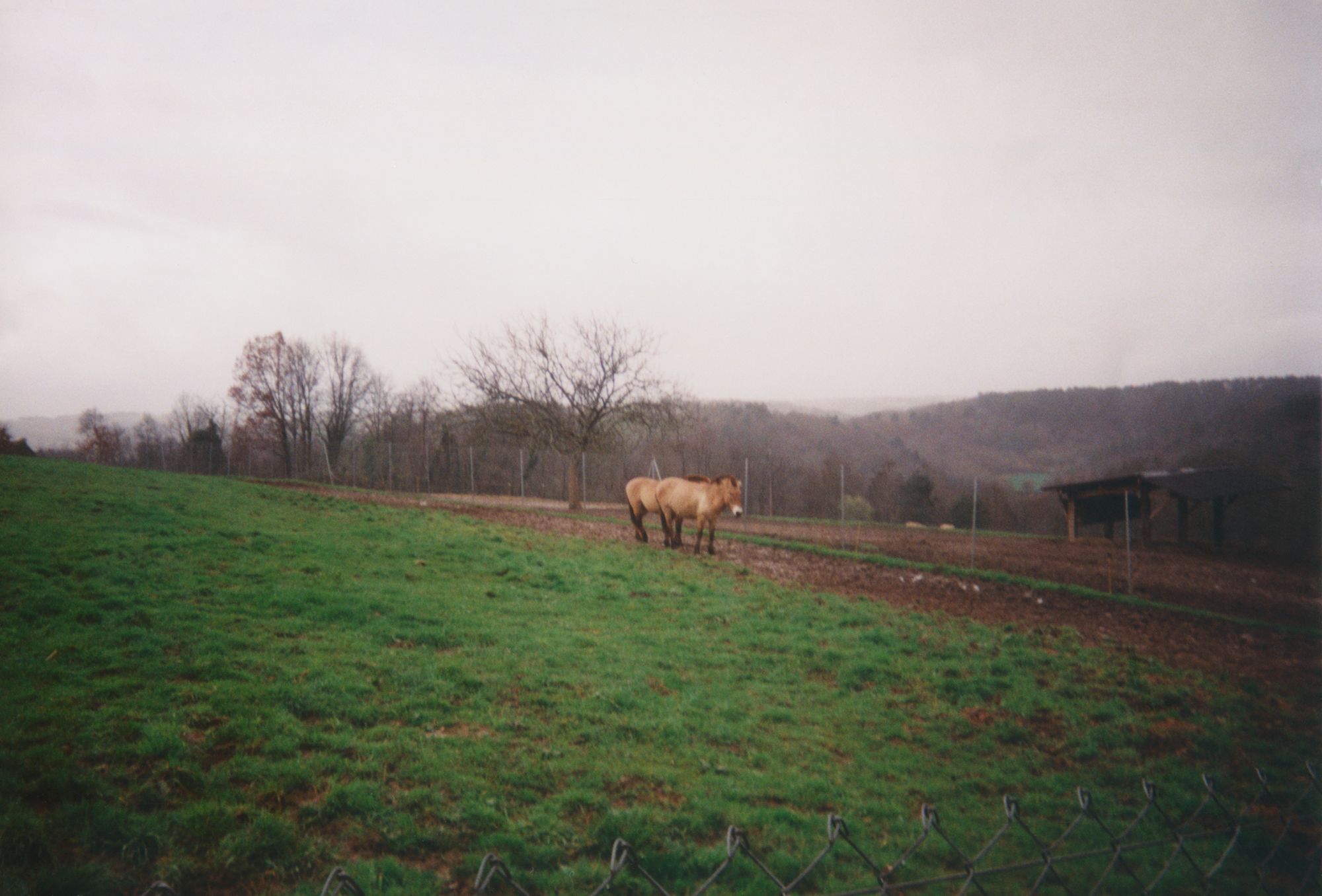
There are empty tracks in the park and animals seen from a distance.
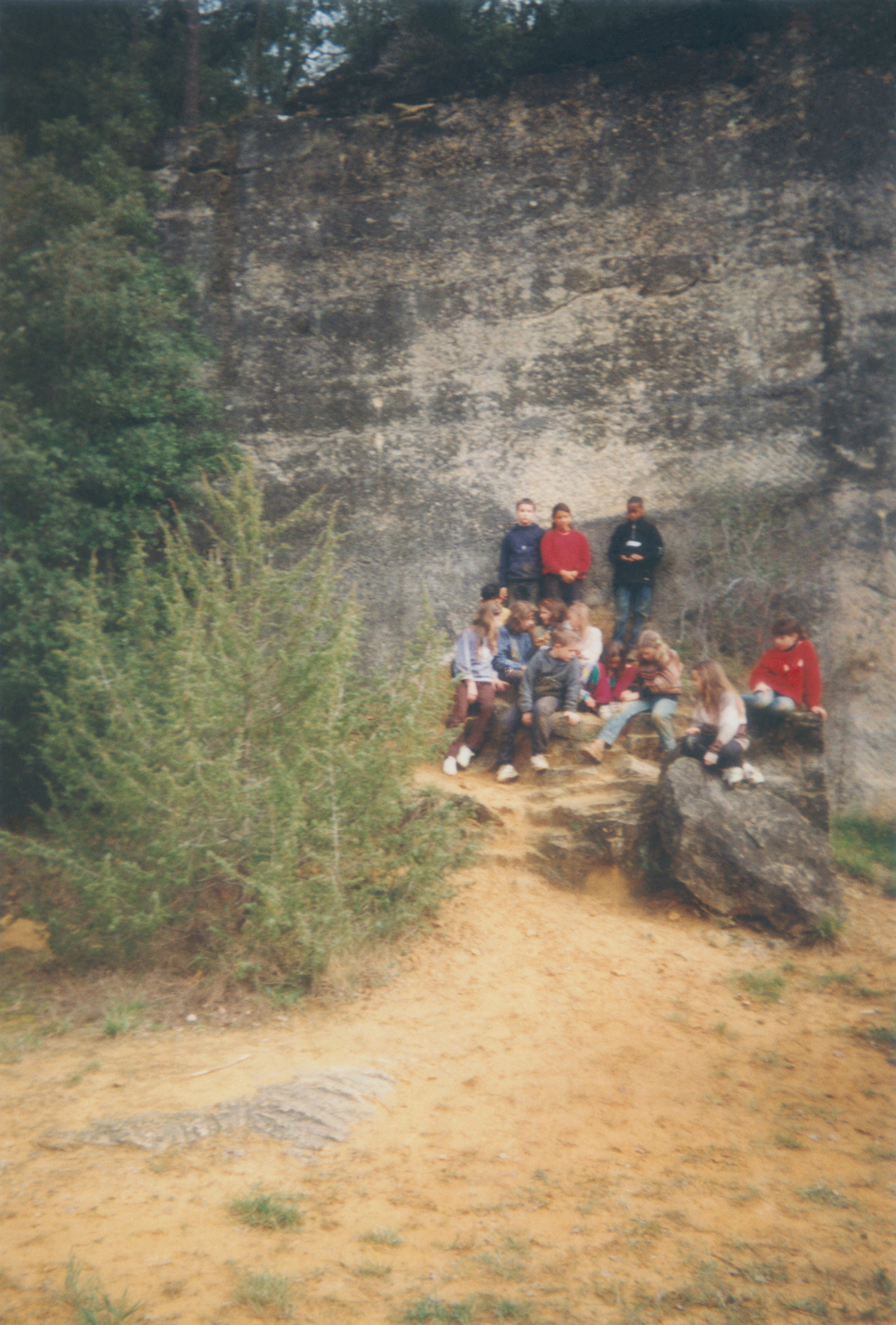
Just one photograph shows the group of children. They are a little too far away, and too unfocused for us to see the detail. Instead, we get the feel of them, mostly tumbled into one another in their sweatshirts and pale sneakers, but a few holding themselves separate.
There is a vast valley seen from a plateau. The camera is tilted, so that we see more sky than land.
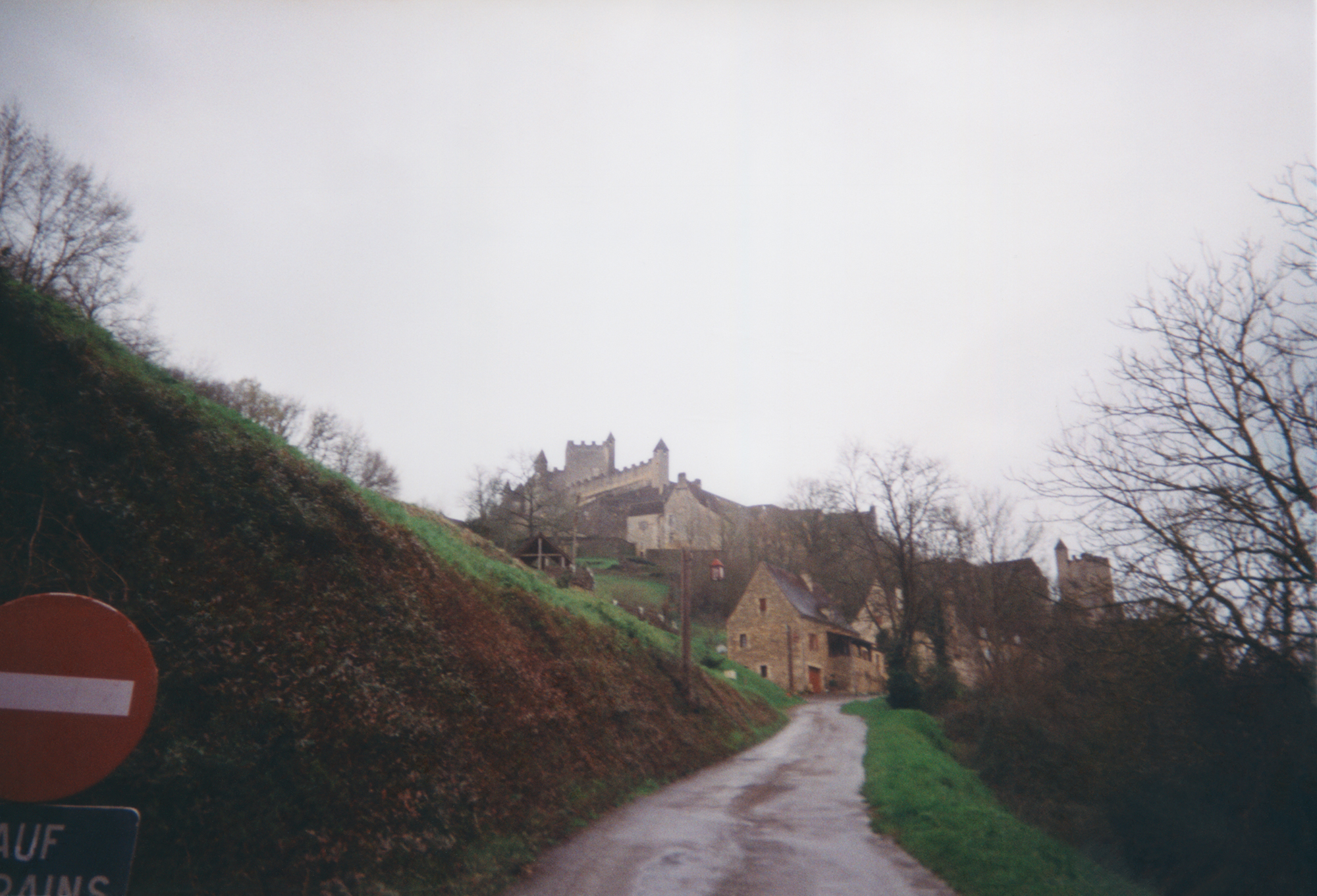
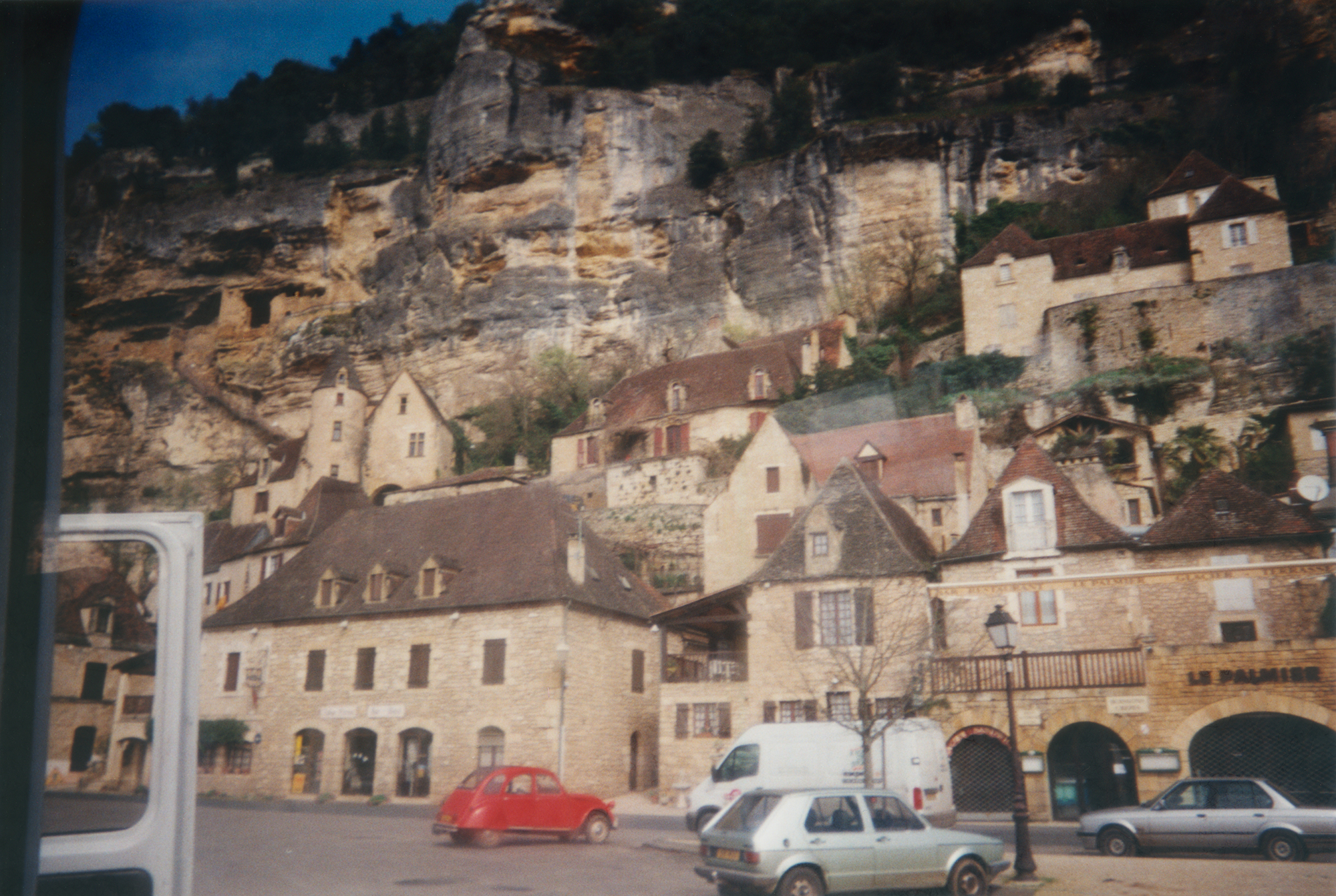
There is a provincial road somewhere outside the park. Dordogne houses, the colour of biscuits, are built into the side of a cliff, as though they had mushroomed from the biscuit-coloured rock, evolving organically and continuously from cave dwellings, which in a way they have.
In a previous photo-project, Mother’s Therapy, de Lattre explored the earliest works of art, zoomorphic stone figures and anthropomorphic rock art paintings. These disparate and ancient images were threaded into a narrative of the artist’s own family history. There is a direct line of continuity between the child and the adult, between the human and the animal, between the cave painters and the artist at work.
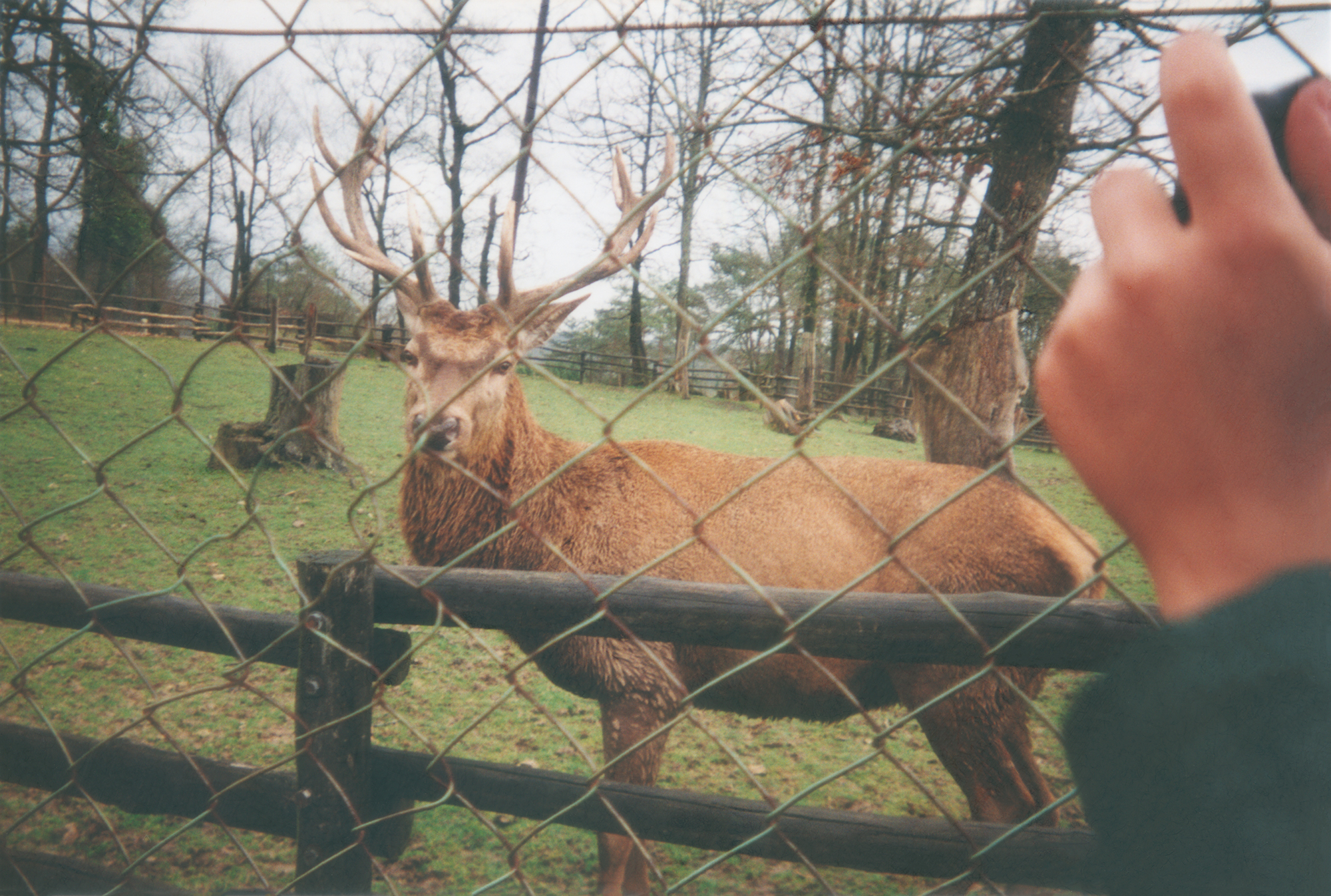
Sometimes and somehow an image just comes together, beautifully formed and exposing something. An antlered stag directs his stare into the camera from the other side of a wire mesh fence that grids his body like a how-to-draw picture. In the foreground, the camera has accidentally captured a shaky pink hand: it shouldn’t be there and it’s just right. In other images, we can see a shake or steep tilt on the camera, and the whole album is soaked in the distinct 2000s bluish timbre. When hand or finger partially obscures the image, making a pink blur on one side, it feels poignant because it presents the child, and not the photographer. It’s the trace of the person who the artist has left behind.
If we could gather together all the art that humans ever made, from the cave paintings to the present, the vast majority of it would have been created by amateurs and children. When we look at, or think about, this great volume of work, we have to respect it, and we have to have a sense of humour about it. The child wasn’t thinking of form, or the market, or the history of art. He didn’t have the accreted knowledge of years in the discipline, which was both his deficiency and his blessing. He could just put his viewfinder up to his world, and snap. Whatever is said of the pictures is more than they need.
Daisy Hildyard